
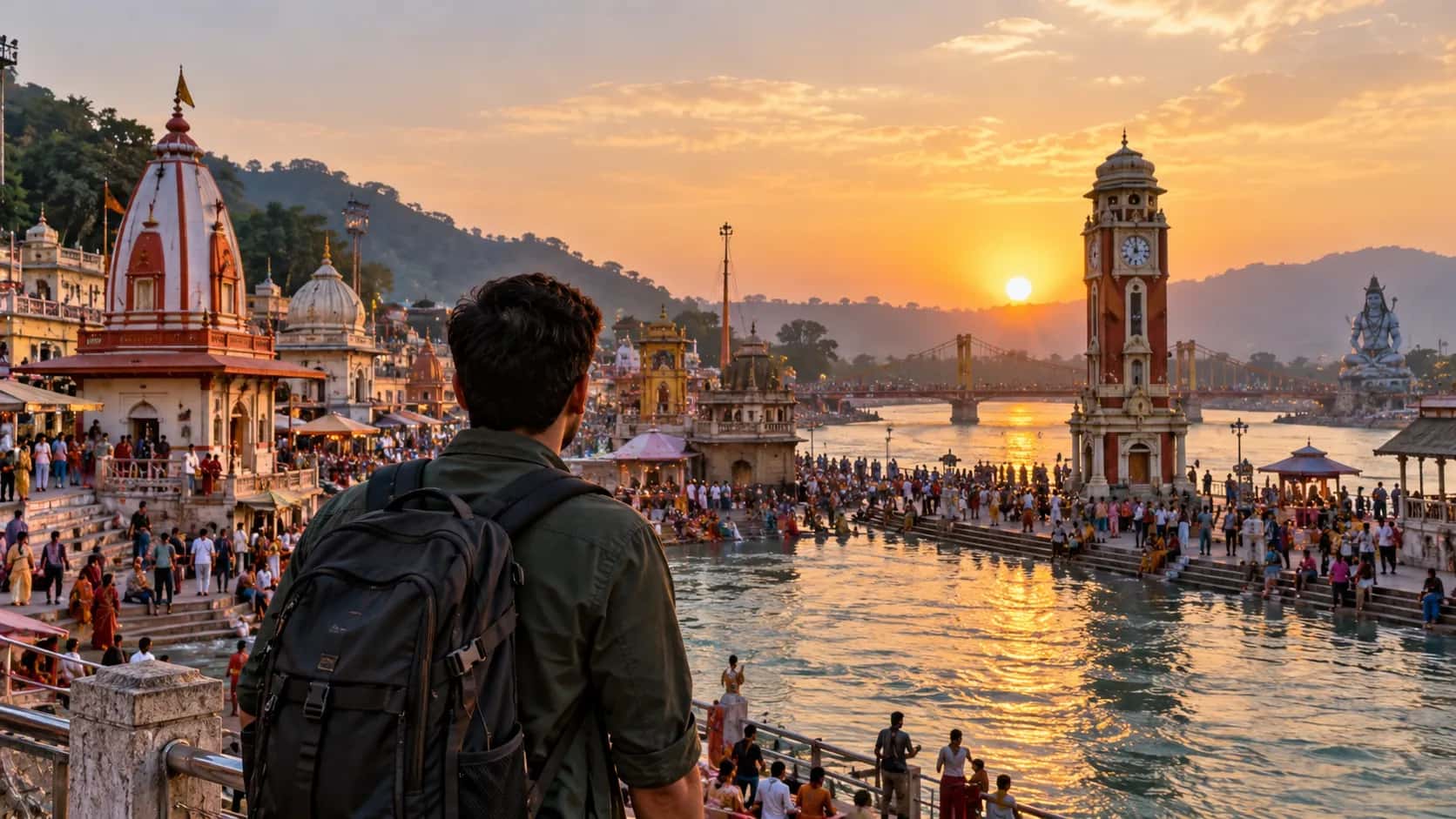
Two days in Haridwar is exactly enough time to experience everything the city does best, and to add a day trip to Rishikesh that rounds the trip into something genuinely memorable. The key is not to rush. Haridwar rewards a slow pace far more than a checklist approach. This guide gives you a practical, honest day-by-day itinerary that covers the Ganga Aarti, the hilltop temples, the bazaars, a Ganga snan, and a day in Rishikesh, without packing every minute and leaving no space to simply sit by the river.

Before You Go: Practical Basics
Haridwar is a pure-vegetarian, no-alcohol city. All food is sattvic and excellent. Most attractions are free or very inexpensive. The two biggest decisions that shape your trip are when to arrive (evening of Day 0 or early morning of Day 1) and where to stay. For a detailed area comparison, see our guide on where to stay in Haridwar.
For timing your visit by season, our best time to visit Haridwar guide covers weather, crowds, and festivals in detail.
Day 1: Haridwar
Morning (5:30 AM to 9:00 AM): Ganga Snan and the Ghats
Start before the city fully wakes. A pre-dawn or early-morning Ganga snan at one of the quieter ghats is one of the most atmospheric experiences Haridwar offers, with mist on the water and the sound of temple bells in the distance. Birla Ghat and Vishnu Ghat are the best choices for a calm, safe dip, quieter than Har Ki Pauri and with safety chains along the steps.
After your snan, walk the riverside path toward Har Ki Pauri. The morning crowd is manageable, and this is the best time to sit at the main ghat, watch the pilgrims, and take photographs without fighting through the evening rush. Our full guide to Ganga snan in Haridwar covers each ghat with facilities, safety, and timings. For a deeper look at the quieter stretches, see the best ghats in Haridwar.
Mid-Morning (9:30 AM to 12:30 PM): Mansa Devi and Chandi Devi
Take the cable car (Udan Khatola) up to Mansa Devi Temple on Bilwa Parvat. The views over the city and the Ganga are excellent, and the ropeway ride is a particular hit with children and elderly visitors who prefer not to trek. After descending, cross the river and take the second cable car up to Chandi Devi Temple on Neel Parvat. Together, the two hilltop temples form the traditional Haridwar pilgrimage circuit, and the views from both are worth every minute.
Ropeway timings generally run from around 7:30 AM to 5:30 PM, though these can shift seasonally. Arrive at the Mansa Devi ropeway by 9:30 AM to avoid the midday queue.
Lunch (12:30 PM to 1:30 PM): Street Food at Bara Bazaar
Head to the lanes around Bara Bazaar for lunch. The best options are the aloo puri and kachori stalls that are still serving fresh food in the late morning and early afternoon. Lassi in clay pots is the ideal accompaniment. Our guide to where to eat in Haridwar covers the best dhabas and stalls in detail.
Afternoon (1:30 PM to 4:30 PM): Maya Devi Temple and Bazaar Walk
After lunch, visit the Maya Devi Temple, one of Haridwar's oldest and most revered shrines and a Shakti Peeth in the heart of the city. It is quieter than the hilltop temples and carries a deeply contemplative atmosphere.
Use the remaining afternoon for a slow walk through the Bara Bazaar and Moti Bazaar lanes. Browse the Rudraksha and puja-item stalls, pick up peda or local sweets to carry home, and soak in the everyday pulse of the city. Our shopping in Haridwar guide covers what to buy in each market and how to bargain well.
Evening (5:30 PM to 8:00 PM): Ganga Aarti at Har Ki Pauri
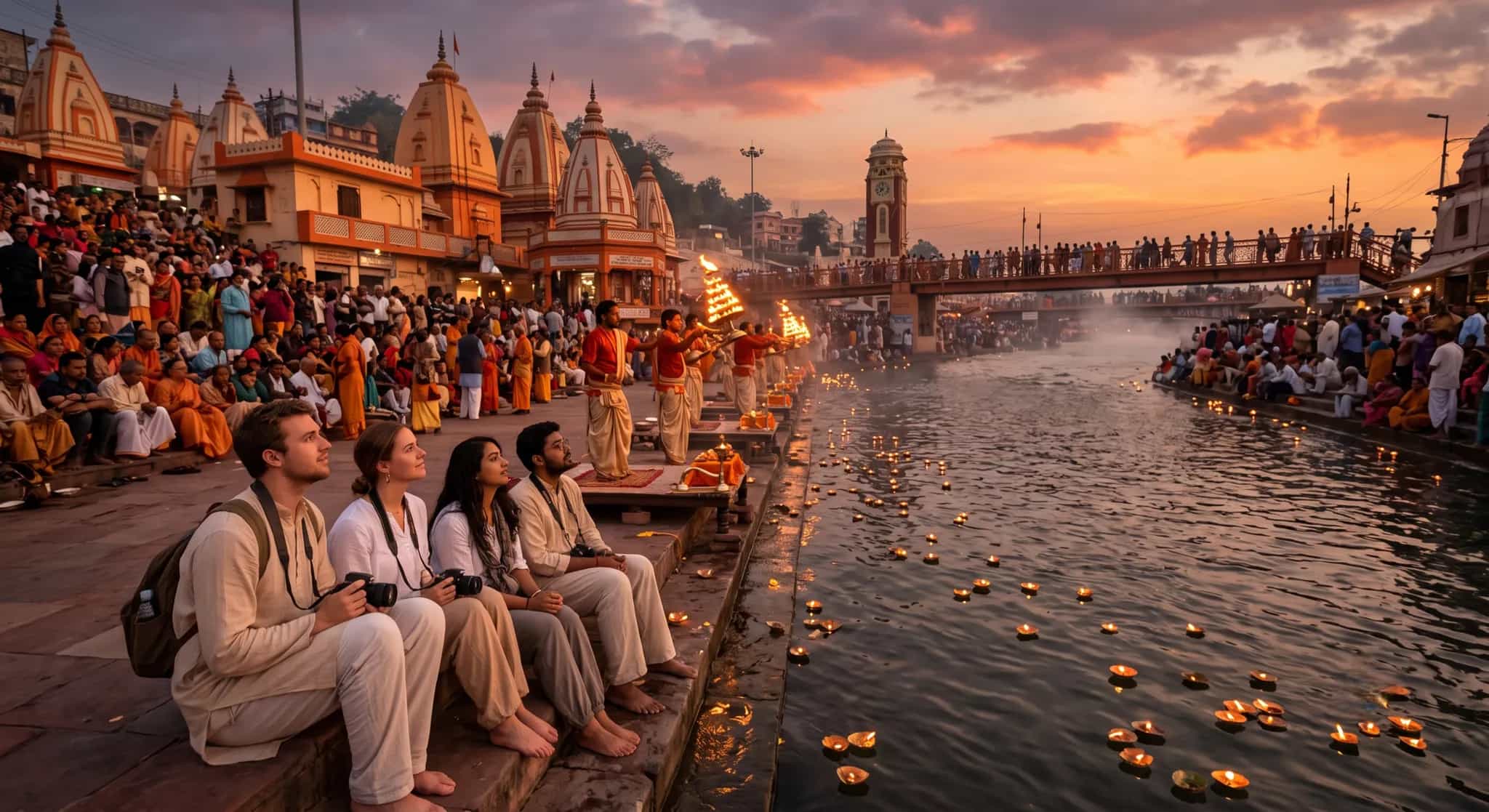
The Ganga Aarti is the centrepiece of any Haridwar visit and the high point of Day 1. Arrive at Har Ki Pauri at least 45 to 60 minutes before the aarti begins to find a good position near the water. In winter the ceremony starts around 5:30 to 6:00 PM and in summer around 6:30 to 7:00 PM.
Watch the priests light the towering lamps, follow the chanting, and release a diya on the river if you wish. The ceremony lasts about 45 minutes and the final minutes, when the floating diyas drift downstream, are the most beautiful. Our complete Ganga Aarti timings guide covers the best viewing spots and exact seasonal timings.
After the aarti, have dinner at one of the dhabas near the ghat, then return to your stay to rest before Day 2.

Day 2: Rishikesh Day Trip
Morning (8:00 AM to 1:00 PM): Ram Jhula, Laxman Jhula and the Ashram Quarter
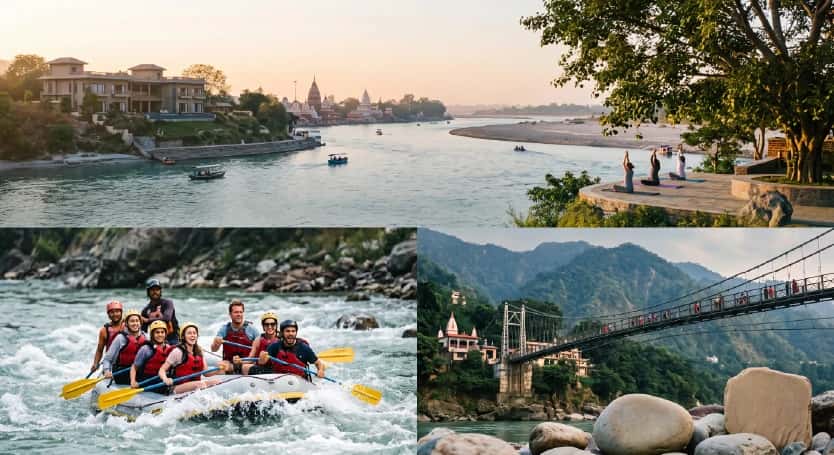
Leave Haridwar by 8:00 AM to reach Rishikesh before the day heats up. The drive takes about 40 to 50 minutes. Head to the Laxman Jhula area first. Note that Laxman Jhula bridge is currently closed for construction and restoration, though the surrounding market, temples, and riverside area remain fully open and worth visiting. The new Bajrang Setu bridge nearby is nearing completion. Ram Jhula, the larger bridge downstream, remains fully open and is where most visitors cross today.
Cross Ram Jhula and explore the ashram quarter on the eastern bank: Parmarth Niketan, Gita Bhawan, and Sivananda Ashram. The riverside walk between Laxman Jhula and Ram Jhula (about 1 to 1.5 km) is one of the most enjoyable short walks in Uttarakhand, with cafes, bookshops, and river views all the way.
Our full Laxman Jhula and Ram Jhula day trip guide covers distances, current bridge status, and a suggested Rishikesh itinerary in detail.
Afternoon (1:00 PM to 4:00 PM): Lunch and Riverside Cafes
Rishikesh has some of the best vegetarian cafes in the region, particularly on the western bank near Swargashram. Take your time over lunch, enjoy the river views, and let the afternoon slow down. This is not a day for rushing.
If you want to add a short adventure, the Beatles Ashram (Chaurasi Kutia) is a short walk from the Laxman Jhula area and worth the small entry fee for its murals and meditation caves.
Evening (5:30 PM to 7:00 PM): Parmarth Niketan Aarti
Time your return to Parmarth Niketan for the evening Ganga Aarti, which begins at approximately 6:00 PM. It is more intimate than the Har Ki Pauri ceremony but deeply moving in its own way, with the ashram devotees and visitors gathered on the riverside steps. Arrive by 5:45 PM for a good position.
After the aarti, drive back to Haridwar (about 40 to 50 minutes) and either rest or take a final evening walk along the quieter ghats.

Where to Stay for a 2-Day Haridwar Itinerary
The right base makes a two-day trip considerably more enjoyable. You want somewhere with easy parking, an early-morning option for the pre-dawn snan, and a location that does not add unnecessary driving time.
Baromas Retreat in Bahadrabad sits on Haridwar's quieter outskirts, about a 40-minute drive (roughly 13 km) from Har Ki Pauri and well placed on the Rishikesh-facing side of the city. That means your Day 2 Rishikesh drive starts without crossing the congested city centre. After full days of temples, ghats, bazaars, and bridges, a calm, comfortable room to return to each evening makes the whole trip more restful.
For more itinerary and attraction ideas, browse the Baromas Retreat blog, and check the official Uttarakhand Tourism site for festival calendars and current advisories.
Ready to plan your Haridwar weekend? Book your stay directly with Baromas Retreat on WhatsApp at 7248557777 for a warm, comfortable, and well-located welcome.