
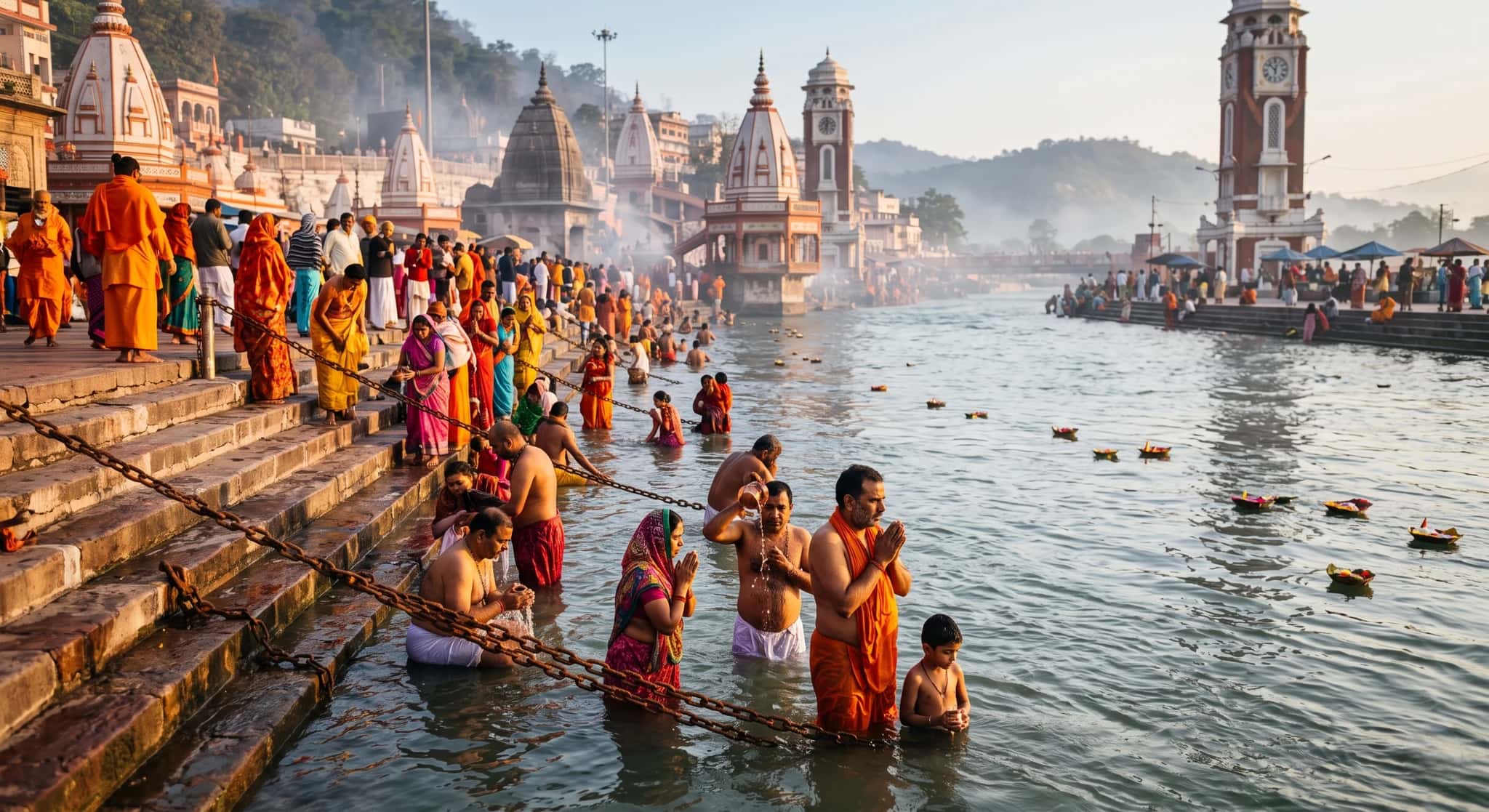
Kartik Purnima falls on 24 November 2026. The Purnima tithi begins on the evening of 23 November and extends through 24 November until 8:23 PM IST. The most auspicious window for the snan is before sunrise on 24 November, during Brahma Muhurta, which falls approximately between 4:30 AM and 5:30 AM at Haridwar's latitude.
A Ganga snan taken at Har Ki Pauri or any of Haridwar's main ghats before the sun rises on Kartik Purnima is considered among the most meritorious acts in the Hindu calendar. Pilgrims travel from across Uttar Pradesh, Rajasthan, Haryana, Punjab, and Delhi specifically for this date.
Why Kartik Purnima Snan at Haridwar Matters
Kartik Purnima is also called Tripuri Purnima and Dev Deepawali. It marks the day Lord Shiva defeated the demon Tripurasura, and also the day Lord Vishnu returns to his celestial abode after the four-month Chaturmas period. Both associations make it a day of intense religious significance at river ghats.
At Haridwar specifically, the combination of the sacred Ganga, the Panch Tirth circuit, and the established tradition of mass snan draws one of the largest gatherings of the year outside Kumbh Mela. The Ganga in November runs clear and cold, with post-monsoon water levels stabilised, making conditions at the ghats more predictable than during the monsoon months.
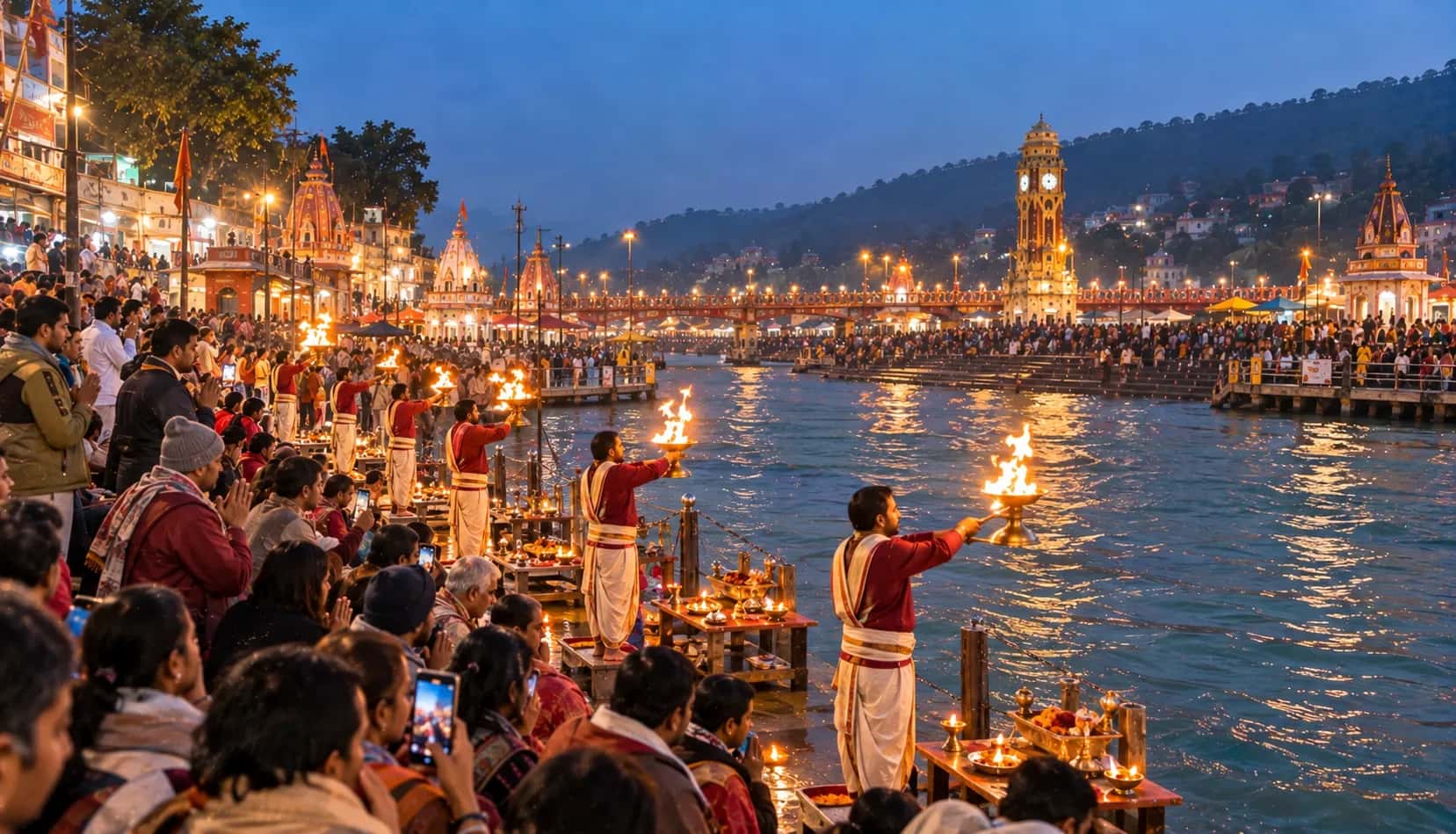
Dev Deepawali, the festival of lamps celebrated on this night at Haridwar's ghats, adds a visual dimension to the evening: diyas are floated on the river and the ghats are lit across their full length. If you are planning this trip, staying through the evening gives you both the pre-dawn snan and the lamp ceremony at dusk.

Best Ghats for Kartik Purnima Snan
Har Ki Pauri is the primary choice for most pilgrims on Kartik Purnima. The Brahma Kund at Har Ki Pauri is where the Ganga is believed to be most sacred, and the ghat has iron safety chains, changing rooms, lockers, and cloakroom facilities. On Kartik Purnima, this ghat fills from 4 AM onward. Expect very high crowds by sunrise. If you want the early morning slot, arrive no later than 4:15 AM.
Birla Ghat is a cleaner and less congested alternative a short distance from Har Ki Pauri. It has safety chains and metal bars along the bathing steps. Changing rooms are limited, which is less convenient for women travelling without companions. For families who want the sanctity of the Ganga without the extreme crush of Har Ki Pauri on festival mornings, Birla Ghat is a practical option.
Vishnu Ghat is calmer still. It is named for its association with Lord Vishnu and is well suited to elderly pilgrims and families with young children. Water movement here is gentler and the ghat sees a fraction of the crowd that Har Ki Pauri draws on festival days.
For full details on what each ghat offers and how they compare on safety, facilities, and crowd levels, our Ganga Snan in Haridwar guide covers each bathing ghat with its specific facilities and safety setup.
What the Kartik Purnima Crowd Is Like
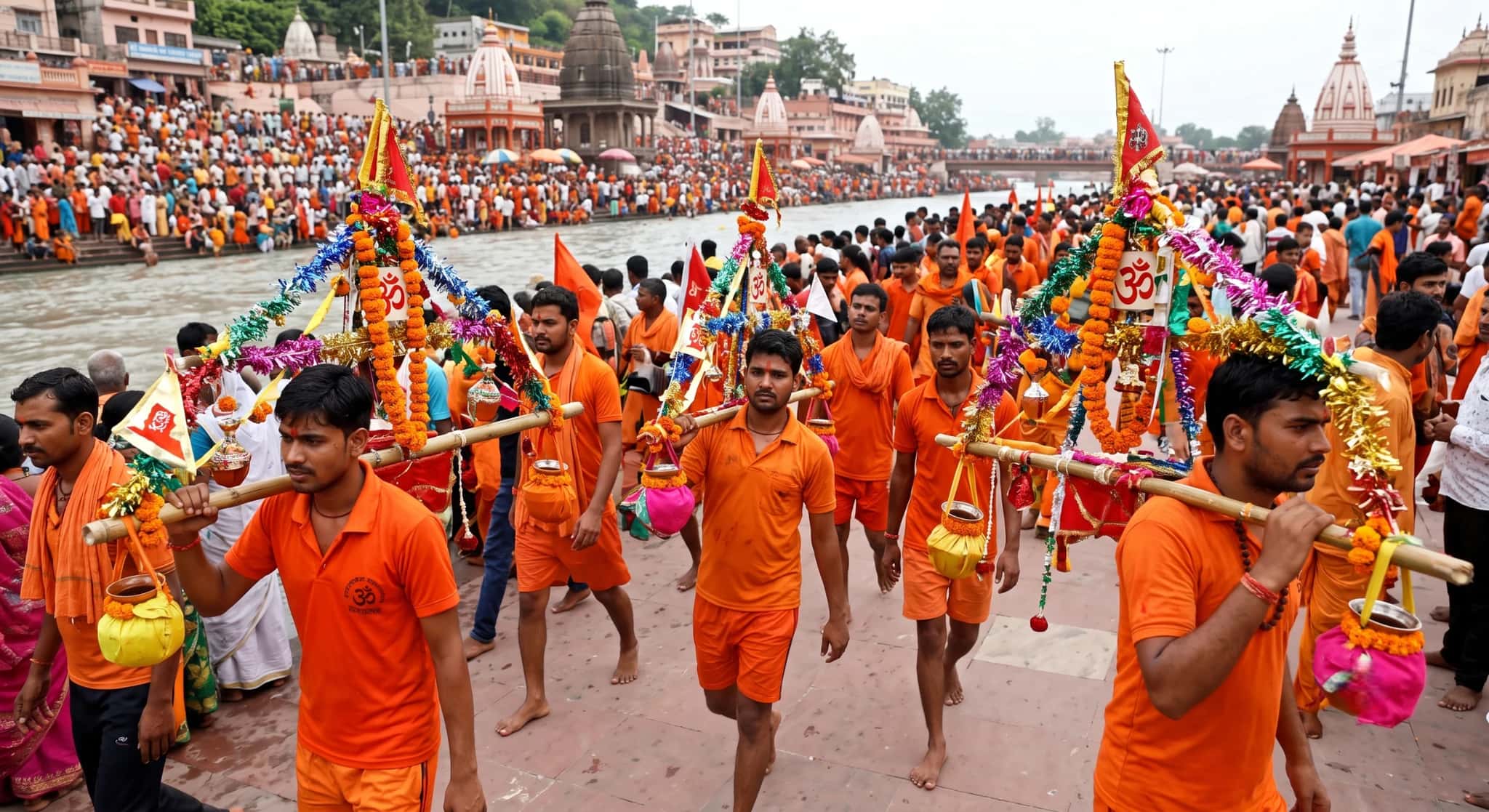
Kartik Purnima is one of Haridwar's busiest single dates outside Kumbh. Expect the following at Har Ki Pauri and the surrounding area:
- The ghat area fills from around 3:30 AM to 4:00 AM on the snan date
- Peak crowd is between 5:00 AM and 8:00 AM
- Auto-rickshaws and shared transport stop running toward the ghat zone by around 3 AM due to road restrictions; confirm current traffic advisory with your hotel
- Parking within the inner city is closed for private vehicles from the evening before; self-drive visitors should park at designated lots on the outskirts and walk or take a shuttle
- The ghats remain very busy through midday; crowd levels thin from early afternoon onward
The best ghats in Haridwar guide has specific information on which ghats have changing rooms, lockers, and facilities, useful for planning which one suits your group on a festival day.

Kartik Purnima Rituals: What Happens at the Ghats
The Kartik Purnima snan involves more than bathing. The full sequence observed by most pilgrims at Haridwar includes:
Pre-dawn snan: A dip in the Ganga before sunrise, during Brahma Muhurta. Many pilgrims chant the Ganga Stotram or recite the names of Lord Vishnu and Lord Shiva before entering the water. The actual dip is brief; the preparation and the chanting are the larger part of the ritual.
Puja and offering: After the snan, pilgrims perform a short puja on the ghat steps. This typically involves offering flowers, akshat (rice), and a diya to the river. Priests are available at all major ghats for those who want a guided puja, though this is optional.
Deep daan (lamp offering): Floating a small earthen lamp on the river is a core Kartik Purnima practice. At Haridwar, this is done both at dawn after the snan and again in the evening during Dev Deepawali. Clay diyas are available from vendors near all the main ghats.
Anna daan: Donating food to pilgrims and the needy on this day is considered particularly meritorious. Several temples and ashrams in Haridwar organise bhandaras (free community meals) on Kartik Purnima.
Dev Deepawali at Haridwar: The Evening Ceremony
The evening of Kartik Purnima is Dev Deepawali, the festival of lamps. The ghats of Haridwar are lit with thousands of diyas from dusk onward. The Ganga Aarti at Har Ki Pauri on this evening is longer and more elaborate than the standard evening aarti, with additional priests, more lamps, and a much larger crowd.
If you plan to attend both the early morning snan and the evening Dev Deepawali ceremony, plan to rest during the afternoon. The full day from 4:30 AM to 8:00 PM is long, and the evening crowd at Har Ki Pauri on this night is comparable to the morning.
For regular Ganga aarti timings and what to expect at Har Ki Pauri throughout the year, our Ganga Aarti Haridwar timings guide has the full schedule.

How to Plan Your Kartik Purnima Visit
When to arrive in Haridwar: Come the day before, on 23 November. The snan begins before dawn on the 24th, and arriving the same day creates unnecessary stress. A night before gives you time to settle, check the ghat situation, and leave your hotel at 4 AM without rushing.
How many nights to book: Two nights works well: arrive 23 November, snan early morning 24 November, rest, attend Dev Deepawali in the evening of the 24th, depart 25 November after breakfast.
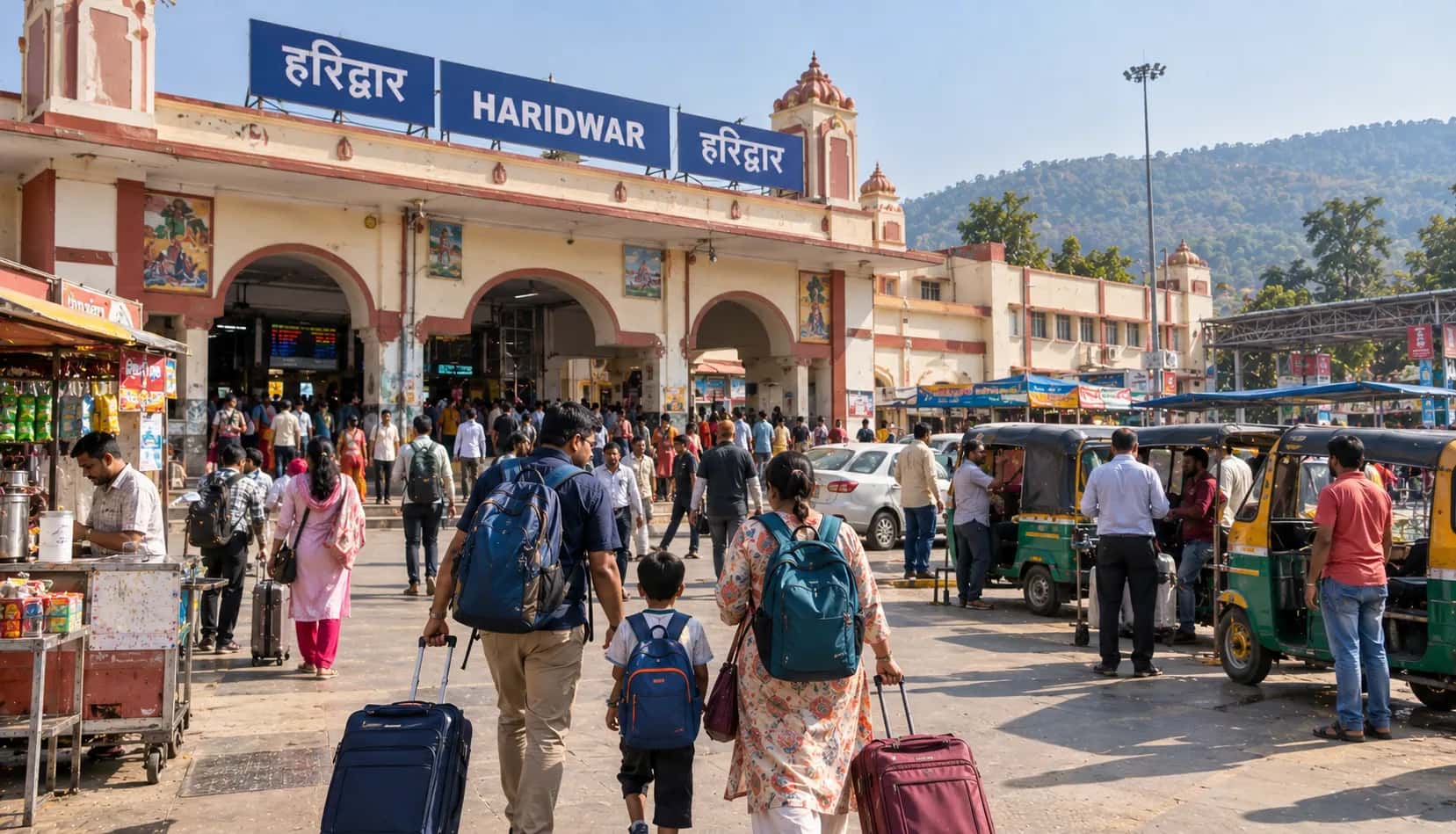
Transport to Haridwar: Haridwar Junction is the main railhead. Trains from Delhi take roughly 4 to 5 hours, and November is peak booking season, so reserve tickets well in advance through IRCTC. Buses from Delhi take 5 to 6 hours and run from ISBT Kashmere Gate and Anand Vihar.
What to carry:
- Change of clothes in a waterproof bag
- Towel and flip-flops for the ghat
- Small container for Ganga jal if you want to carry some back
- Cash for puja, prasad, and auto-rickshaws (card readers are not available at ghats)
- A light layer for the pre-dawn walk; November mornings in Haridwar are cold, typically 10 to 15 degrees Celsius before sunrise

Where to stay: Haridwar hotels near the ghat area fill up weeks in advance for Kartik Purnima. If you are booking late, the Bahadrabad corridor on the Rishikesh side of Haridwar typically has better availability, with travel time of approximately 40 minutes to Har Ki Pauri. For a full overview of areas and what each offers, our where to stay in Haridwar guide covers the main zones including how each suits a festival visit.
If you are combining Kartik Purnima with a longer Haridwar trip, our Haridwar in November guide covers the full month: weather, what to pack, and how November compares to other seasons.