

Nag Panchami is one of the oldest and most widely observed festivals in the Hindu calendar, and it carries a special significance when celebrated in a sacred city like Haridwar or Rishikesh. Dedicated to the worship of serpent deities, the Nagas, who are deeply intertwined with Lord Shiva in Hindu tradition, the festival takes on an added layer of devotion when it falls during the holy month of Sawan. In 2026, Nag Panchami falls on Monday 17 August, which is also the third Sawan Somwar of the month, giving it a rare double spiritual significance. This guide covers the date and puja timings, the mythology behind the festival, how it is observed in Haridwar and Rishikesh, and practical tips for visitors.

When is Nag Panchami in 2026?
Nag Panchami 2026 is observed on Monday, 17 August 2026, across most of India including Uttar Pradesh, Bihar, Madhya Pradesh, Rajasthan, Maharashtra, Karnataka, Andhra Pradesh, and Tamil Nadu. The Panchami Tithi begins on the afternoon of 16 August (around 4:52 PM) and ends on the evening of 17 August (around 5:00 PM).
The most auspicious puja muhurat is the early morning window of approximately 6:04 AM to 8:39 AM on 17 August, a duration of about two hours and thirty-five minutes.
Note that Gujarat observes Nag Pancham on a different date, around 1 September 2026, following the Amanta lunar calendar. As with all Hindu festivals, the date shifts each year with the lunar calendar, so confirm the exact date for future years through a reliable Panchang source before planning your visit.
Why Nag Panchami is Especially Significant in Sawan
In 2026, Nag Panchami coincides with the third Sawan Somwar, the third Monday of the sacred month dedicated to Lord Shiva. This double observance makes the day particularly powerful for Shiva devotees, since serpents are among the most sacred symbols associated with the deity. Lord Shiva wears the Nag, the serpent, around his neck as Vasuki, and the Naga deities are considered his protectors and companions.
Sawan 2026 runs from 30 July to 28 August in North India, and the four Sawan Somwars fall on 3, 10, 17, and 24 August. The 17 August date therefore carries the weight of both Nag Panchami devotion and Sawan Somwar fasting and worship, drawing significantly larger numbers of pilgrims to the ghats and Shiva temples in Haridwar and Rishikesh than on a regular Nag Panchami.
For the full Sawan picture and what the monsoon month means for visiting Haridwar, see our guide to Haridwar in monsoon.
The Mythology Behind Nag Panchami
Nag Panchami has its roots in several overlapping Hindu legends, each reinforcing the sanctity of serpents in the natural and spiritual order.
One of the most widely told stories involves King Janamejaya, who performed a great serpent sacrifice (Sarpa Yajna) to avenge his father Parikshit's death by snakebite. The sage Astika intervened to stop the yajna, saving the serpent race. The day the yajna was halted is celebrated as Nag Panchami, a day of reconciliation and reverence toward the Naga deities.
A second legend connects the festival to Lord Krishna, who on this fifth day of Sawan defeated the fearsome Kaaliya Nag by dancing on its hood in the river Yamuna, freeing the Gokul villagers from its poison. The victory is celebrated as an affirmation of divine protection over earthly fear.
In the Shiva tradition, Nag Panchami honours Vasuki, the serpent that Lord Shiva wears as his ornament, and Shesha Nag, the cosmic serpent on whom Lord Vishnu rests in the primordial ocean. Together, these stories frame the serpent not as a creature of fear but as a being of power, protection, and cosmic balance.
How Nag Panchami is Observed in Haridwar
Haridwar does not have a single dominant Nag Panchami site in the way that dedicated Naga temples in Maharashtra or South India anchor the festival in those regions. Instead, the festival is woven into the broader Sawan devotional landscape of the city.
On Nag Panchami, devotees in Haridwar observe the following:
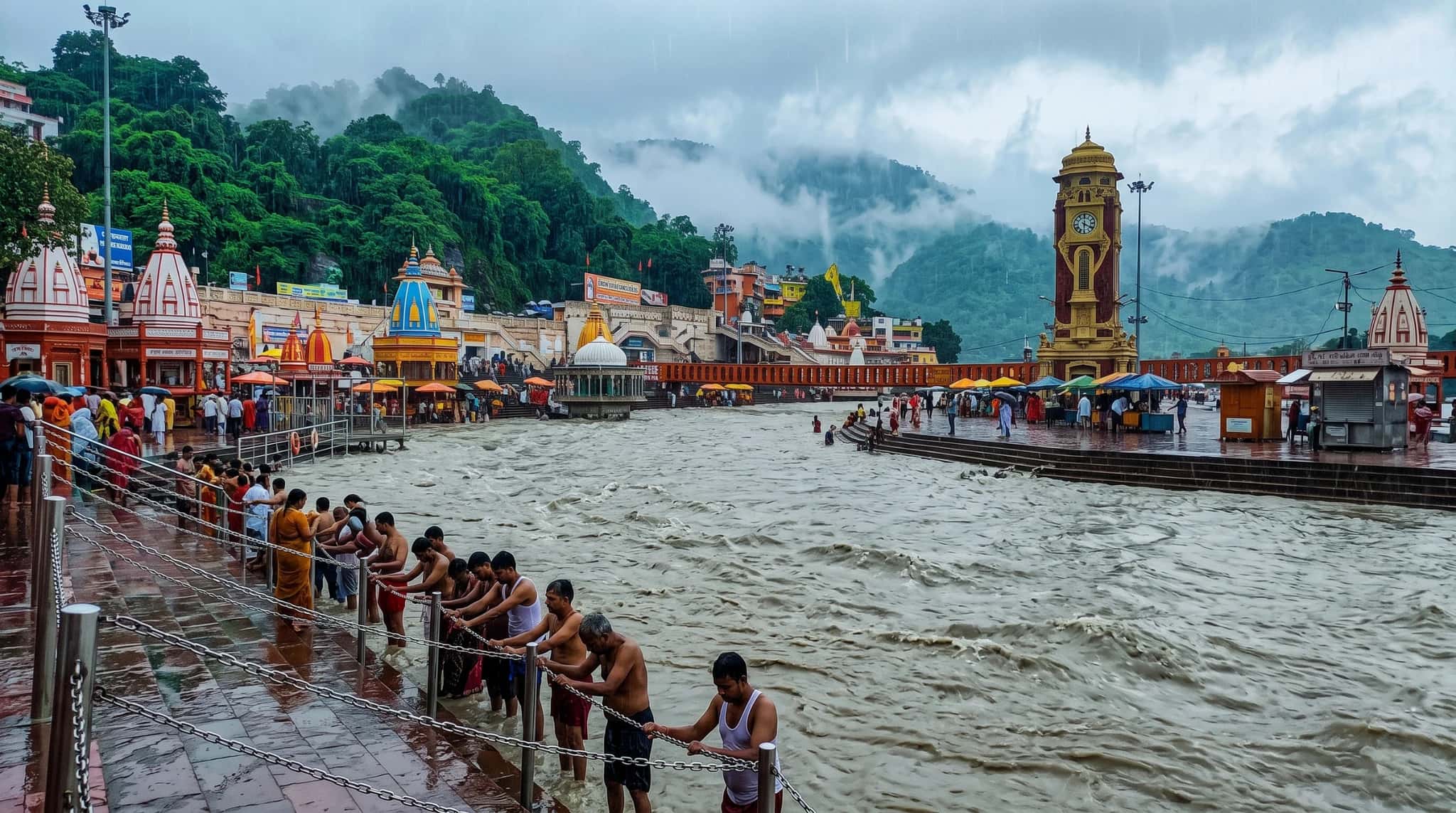
- Early morning Ganga snan: a holy dip at Har Ki Pauri or the quieter ghats before the puja muhurat begins. Since this year the festival falls on a Sawan Somwar, the ghats will be busier than on an ordinary Nag Panchami.
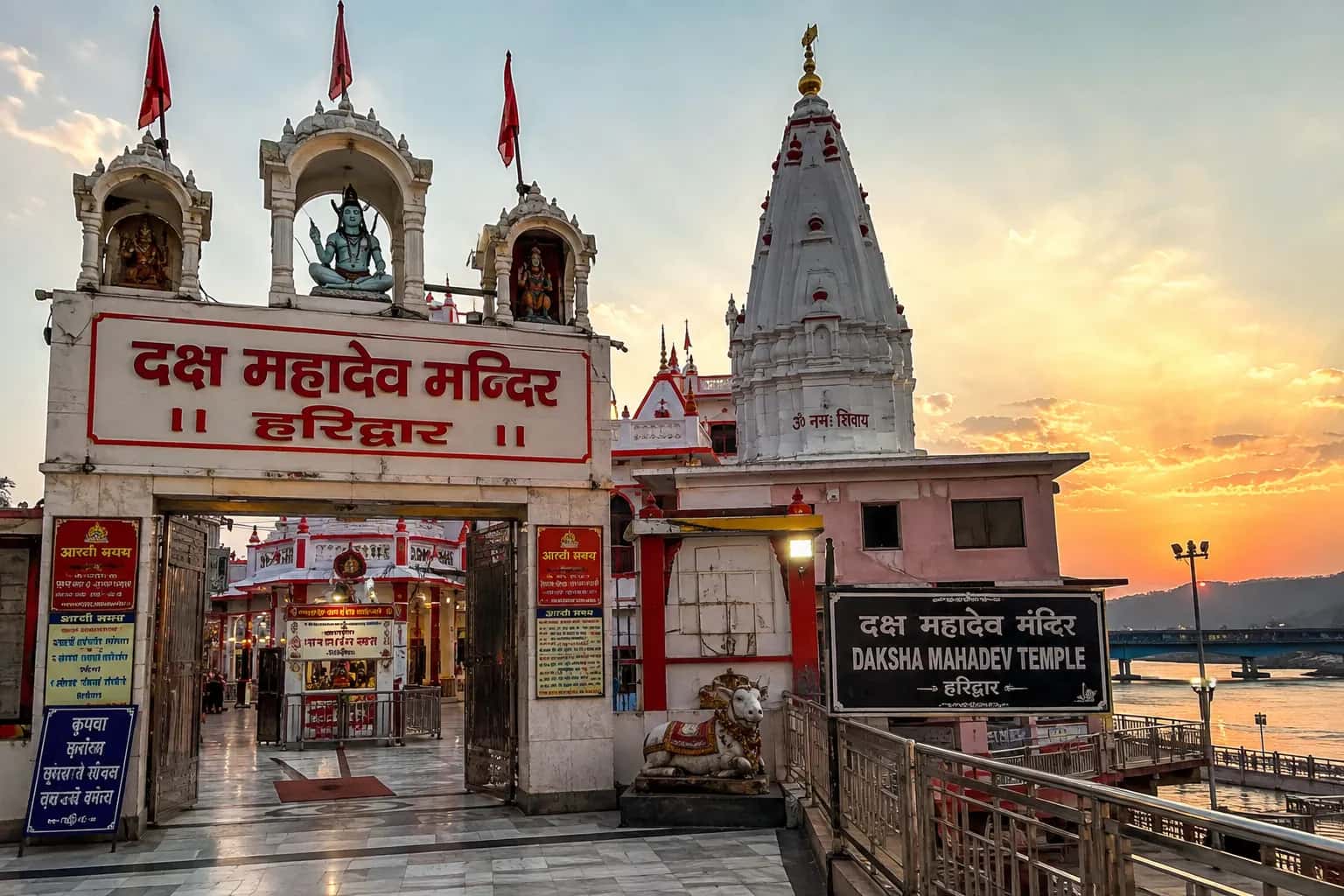
- Temple worship: Shiva temples in and around Haridwar, including the Daksha Mahadev Temple in Kankhal and the Maya Devi Temple, see additional footfall. Offerings of milk, bel patra, and flowers are made at Shivalingas, with the Naga connection giving the puja extra resonance.
- Milk offerings to serpents: in the traditional observance, devotees offer milk to snake idols or clay models of serpents made for the occasion. Some families visit the riverbanks with milk offerings for the Naga deities associated with the Ganga.
- Fasting: many devotees fast from sunrise to sunset on Nag Panchami, breaking the fast in the evening with kheer (rice cooked in milk) as prasad after the puja.
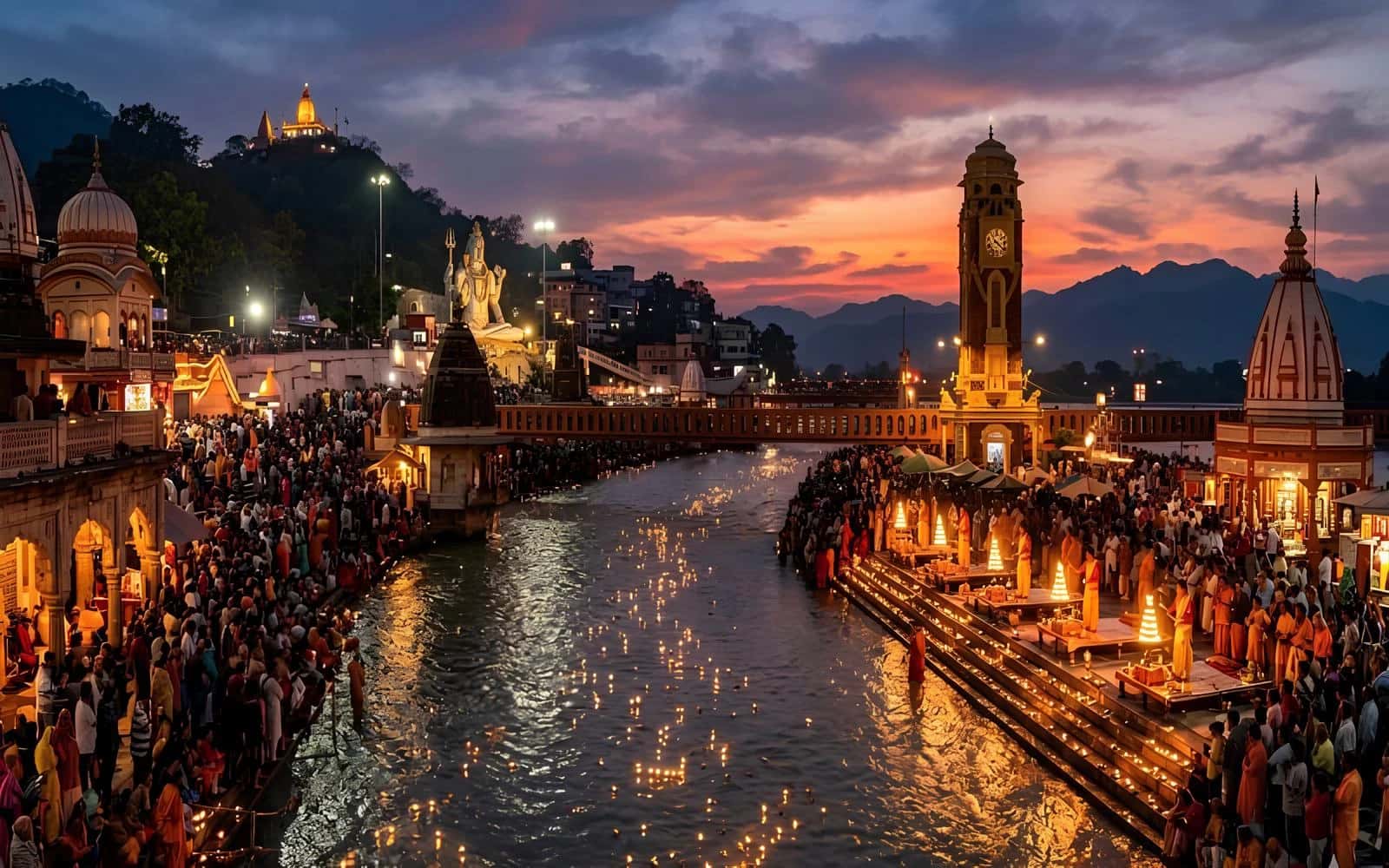
For ghat timings and safety advice for a Sawan Somwar snan, see our guide to Ganga snan in Haridwar, and for the Ganga Aarti that will follow in the evening, our Ganga Aarti timings guide has everything you need.
How Nag Panchami is Observed in Rishikesh
Rishikesh, with its dense concentration of ashrams and its deep Shaiva character, observes Nag Panchami with both the standard serpent worship and the added dimension of the Sawan-Shiva connection. Several ashrams along the Ganga hold special pujas and discourses on this day.
The Triveni Ghat in Rishikesh sees morning snan activity, and ashrams including Parmarth Niketan hold Nag Panchami puja sessions that visitors are welcome to attend. The evening Ganga Aarti at Parmarth Niketan continues as on any day of Sawan, and this year the third Sawan Somwar energy amplifies the atmosphere further.
For visitors doing a day trip from Haridwar to Rishikesh on or around Nag Panchami, our Haridwar to Rishikesh day trip guide covers Ram Jhula, Laxman Jhula, and Parmarth Niketan in detail.
Nag Panchami Puja Rituals: What to Do
Whether you are in Haridwar, Rishikesh, or at home, the core Nag Panchami puja follows a similar structure:
- Wake before the muhurat: begin preparations before sunrise so you are ready for the auspicious 6:04 AM to 8:39 AM window.
- Take a holy bath: a snan in the Ganga, a sacred river, or at home before puja.
- Prepare or find a Naga idol: clay serpent images are traditional. Some devotees draw a serpent on paper or use a silver or stone idol.
- Offer milk and flowers: milk is the primary offering to the Naga deities on this day. Offer it with devotion rather than quantity.
- Recite the Nag Panchami mantra: "Om Nag Devtaye Namah" or the fuller invocation of the twelve Nagas (Ananta, Vasuki, Shesha, Padma, Kambala, Karkataka, Ashvatara, Dhritarashtra, Shankhapala, Kaliya, Takshaka, Pingala) is traditional.
- Fast until sunset: break the fast with kheer or sabudana-based dishes as prasad.
- Avoid digging the earth: a traditional observance on Nag Panchami is to avoid disturbing the ground, out of respect for the serpents that live beneath it.
Practical Tips for Visiting Haridwar on Nag Panchami
- Arrive at the ghats before 6:00 AM to secure a safe position for the Sawan Somwar snan and the puja muhurat.
- Expect larger-than-usual crowds at Har Ki Pauri and Shiva temples, since the Sawan Somwar and Nag Panchami coincide.
- Carry milk in a clean container if you wish to make an offering at a temple. Small clay pots are available at the market stalls near the ghats.
- Hold safety chains at the ghats. The Ganga is at monsoon levels in August. Never bathe without holding the chains, and follow ghat attendant instructions.
- Dress modestly near temples and the river, covering shoulders and knees.
- Book transport in advance if you are day-tripping from Haridwar to Rishikesh. Festival days see increased demand for cabs and shared autos.
For road and weather conditions, check the India Meteorological Department forecast, and the official Uttarakhand Tourism site is a useful reference for any local advisories.
Where to Stay for Nag Panchami and Sawan
If you are in Haridwar for the Sawan season and want a comfortable base for the Nag Panchami observance, a peaceful outskirts stay works well. The central ghat areas will be busy through the day and into the evening.
Baromas Retreat in Bahadrabad sits on Haridwar's quieter outskirts, about a 40-minute drive (roughly 13 km) from Har Ki Pauri, and well placed on the Rishikesh side of the city for those combining both cities in their Sawan itinerary. After a full day of puja, snan, and ghat visits, a calm and comfortable room makes the rest and recovery much easier. For area advice, see our guide on where to stay in Haridwar, and browse all our Sawan and festival guides on the Baromas Retreat blog.
Planning your Nag Panchami or Sawan visit to Haridwar? Book your stay directly with Baromas Retreat on WhatsApp at 7248557777 for a warm, peaceful welcome during the holy month.