
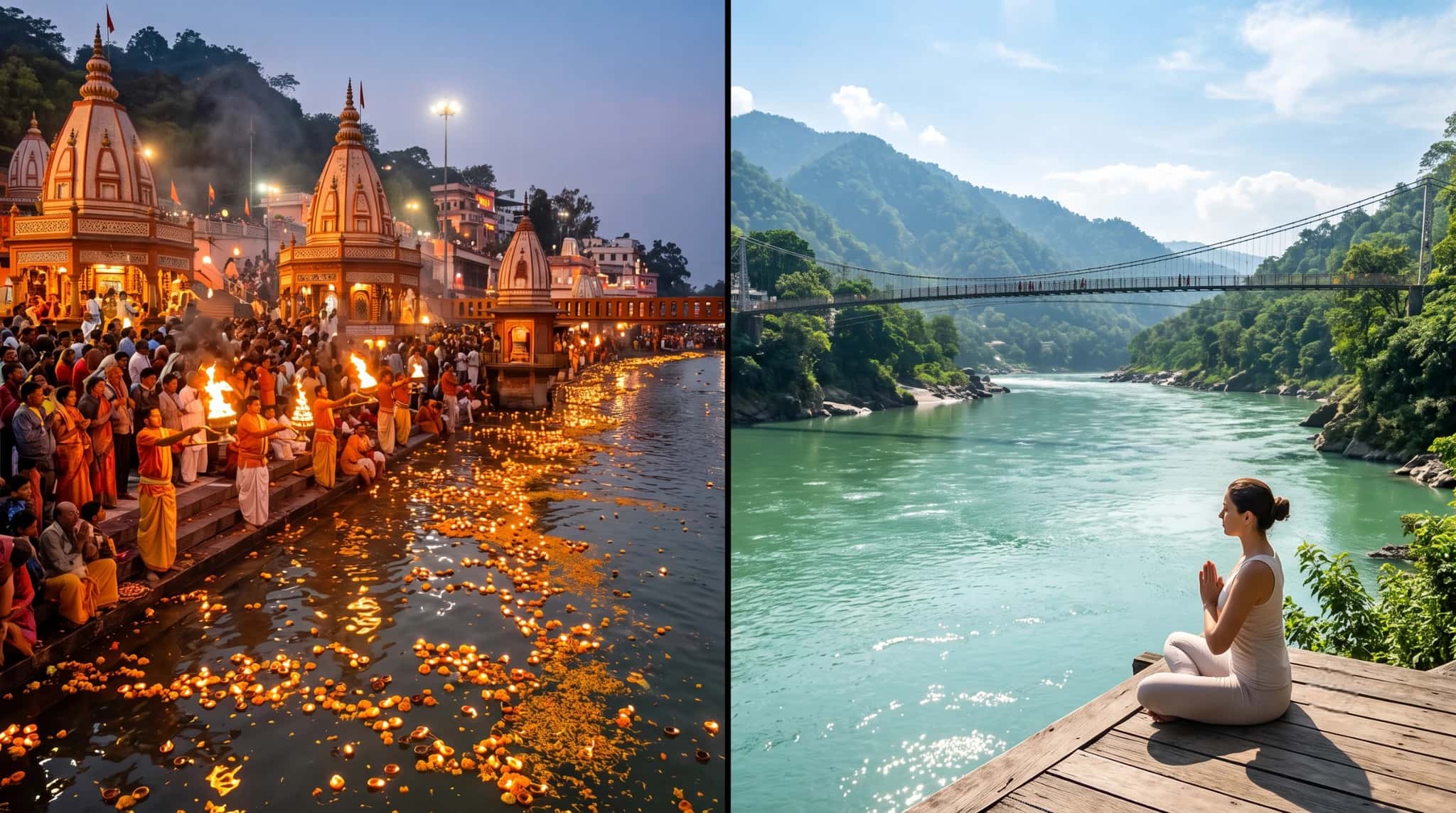
The road distance from Haridwar to Mussoorie is approximately 90 km via Dehradun. The journey takes 2.5 to 3 hours by road in normal traffic. There is no direct bus from Haridwar to Mussoorie, the standard route is Haridwar to Dehradun by bus (1.5 to 2 hours), then Dehradun to Mussoorie by local bus or taxi (about 1 hour and 35 km of hill road).
Mussoorie is one of the most visited hill stations in northern India and a natural extension of a Haridwar trip. Most travellers combine it with Dehradun as a two-day extension.
Distance from Haridwar to Mussoorie
By road: approximately 90 km via Dehradun (the only practical road route)
Breakdown of the route:
- Haridwar to Dehradun: approximately 55 km (1 to 1.5 hours)
- Dehradun to Mussoorie: approximately 35 km (45 minutes to 1 hour, uphill)
Total drive time: 2.5 to 3 hours in normal traffic, depending on stops and traffic through Dehradun city.
The route passes through the Rajaji forest corridor on NH-7 between Haridwar and Dehradun, then climbs the Mussoorie hill road from Dehradun. The hill section has steep hairpin bends and blind corners, allow extra time and do not rush this stretch.
If you are arriving from Delhi, our Delhi to Haridwar guide covers the first leg of the journey before you continue north.

Route: Haridwar to Mussoorie via Dehradun
This is the only practical road route. There is no direct road from Haridwar to Mussoorie that bypasses Dehradun.
Haridwar > NH-7 north > Motichur > Raiwala > Doiwala > Dehradun > Rajpur Road > Mussoorie
Key points on this route:
- Rajaji forest stretch (Haridwar to Raiwala): A 15 to 20 km section through the Rajaji National Park buffer zone. Elephants cross here, especially at dawn and dusk. Keep speed low on this stretch.
- Dehradun city: Traffic through Dehradun can add 20 to 30 minutes, especially during morning and evening peak hours. The city bypass helps partially but Rajpur Road (the climb to Mussoorie) still passes through the upper city.
- Dehradun to Mussoorie climb: 35 km of continuous uphill road with tight hairpins. The road is well-maintained but narrow in sections. For a vehicle carrying 5 or more people and luggage, an SUV or Innova is strongly recommended over a small sedan.
Haridwar to Mussoorie by Bus
There is no reliable direct bus from Haridwar to Mussoorie. The journey is done in two legs:
Leg 1: Haridwar to Dehradun
- Buses depart from Haridwar Bus Stand (ISBT) on Railway Road throughout the day.
- Uttarakhand Roadways and HRTC run frequent services, departures roughly every 20 to 30 minutes during daytime.
- Journey time: 1.5 to 2 hours
- Fare: approximately Rs. 80 to Rs. 120 (verify at the counter)
- Arrive at Dehradun ISBT (Parade Ground)
Leg 2: Dehradun to Mussoorie
- Mussoorie buses depart from a stand near Dehradun clock tower / Parade Ground, a short auto ride from the ISBT.
- Uttarakhand Roadways runs regular buses on the Dehradun-Mussoorie route.
- Journey time: approximately 1 hour
- Fare: approximately Rs. 50 to Rs. 80 (verify at the counter)
- Private buses and shared taxis (Sumo/Bolero) also ply this route and are faster on the hill section.
Total bus journey time: 3 to 4 hours including the transfer in Dehradun.
For booking private buses or coaches on this route, check AbhiBus or redBus for available services.

Haridwar to Mussoorie by Taxi
A direct taxi from Haridwar to Mussoorie is the most comfortable option, particularly for families or groups. The taxi drops you at your hotel in Mussoorie without the Dehradun transfer.
Approximate fares (one-way, fuel and driver included):
| Vehicle | Seats | Approximate Fare |
|---|---|---|
| Sedan (Swift Dzire / Etios) | 4 | Rs. 2,750 to Rs. 3,500 |
| SUV (Ertiga) | 6 | Rs. 3,250 to Rs. 4,000 |
| Innova Crysta | 7 | Rs. 3,700 to Rs. 5,500 |
| Tempo Traveller | 12 | Rs. 6,000 to Rs. 7,500 |
Tolls and parking are charged additionally. Driver allowance (approximately Rs. 300 to Rs. 500 per day) may or may not be included, confirm at the time of booking.
For groups of 5 or more, a taxi works out cheaper per head than individual bus tickets, and saves the Dehradun transfer time. For the hill section, an SUV or Innova is strongly preferred over a sedan when carrying a full load.

Haridwar to Mussoorie by Train (Partial)
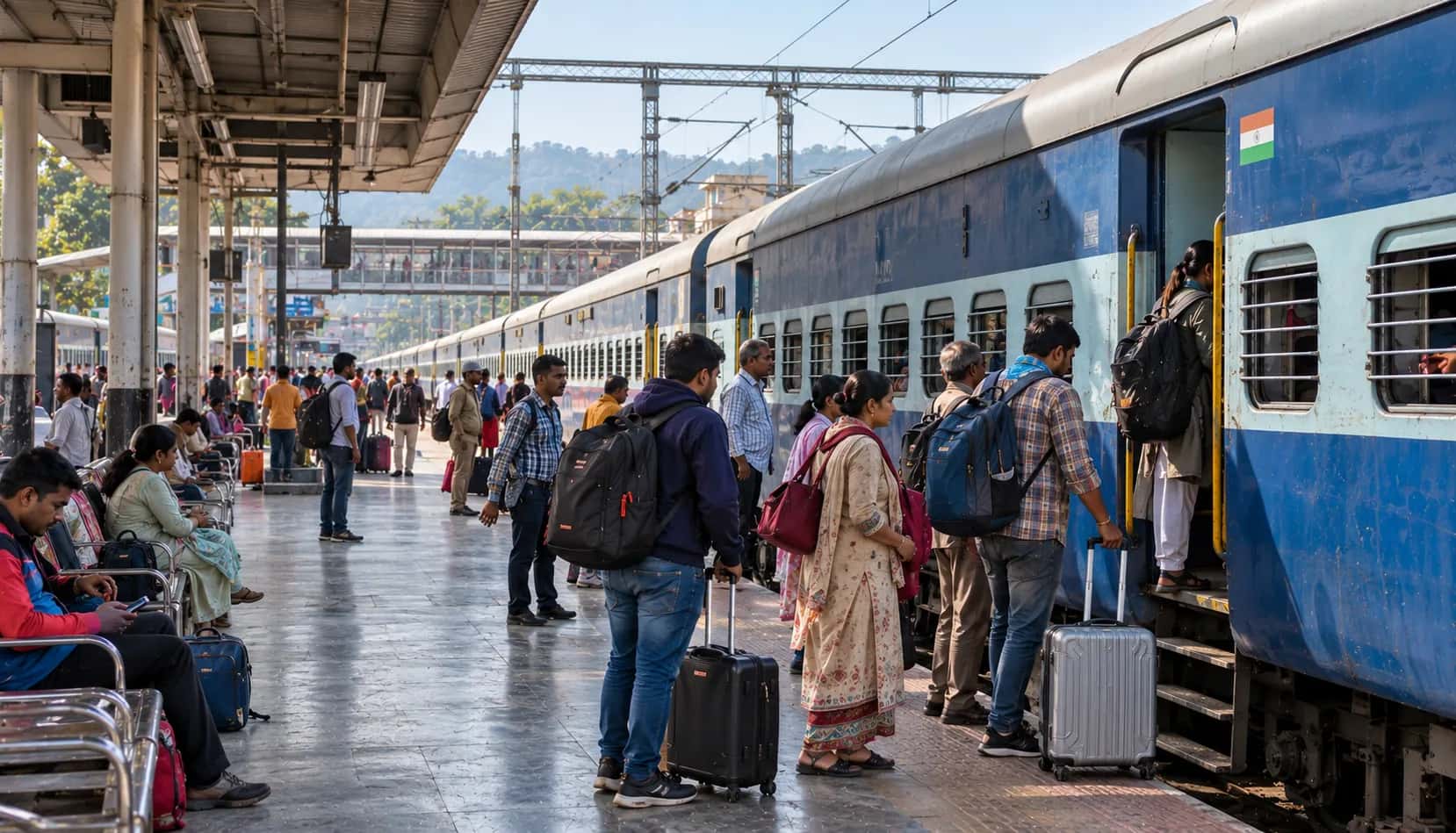
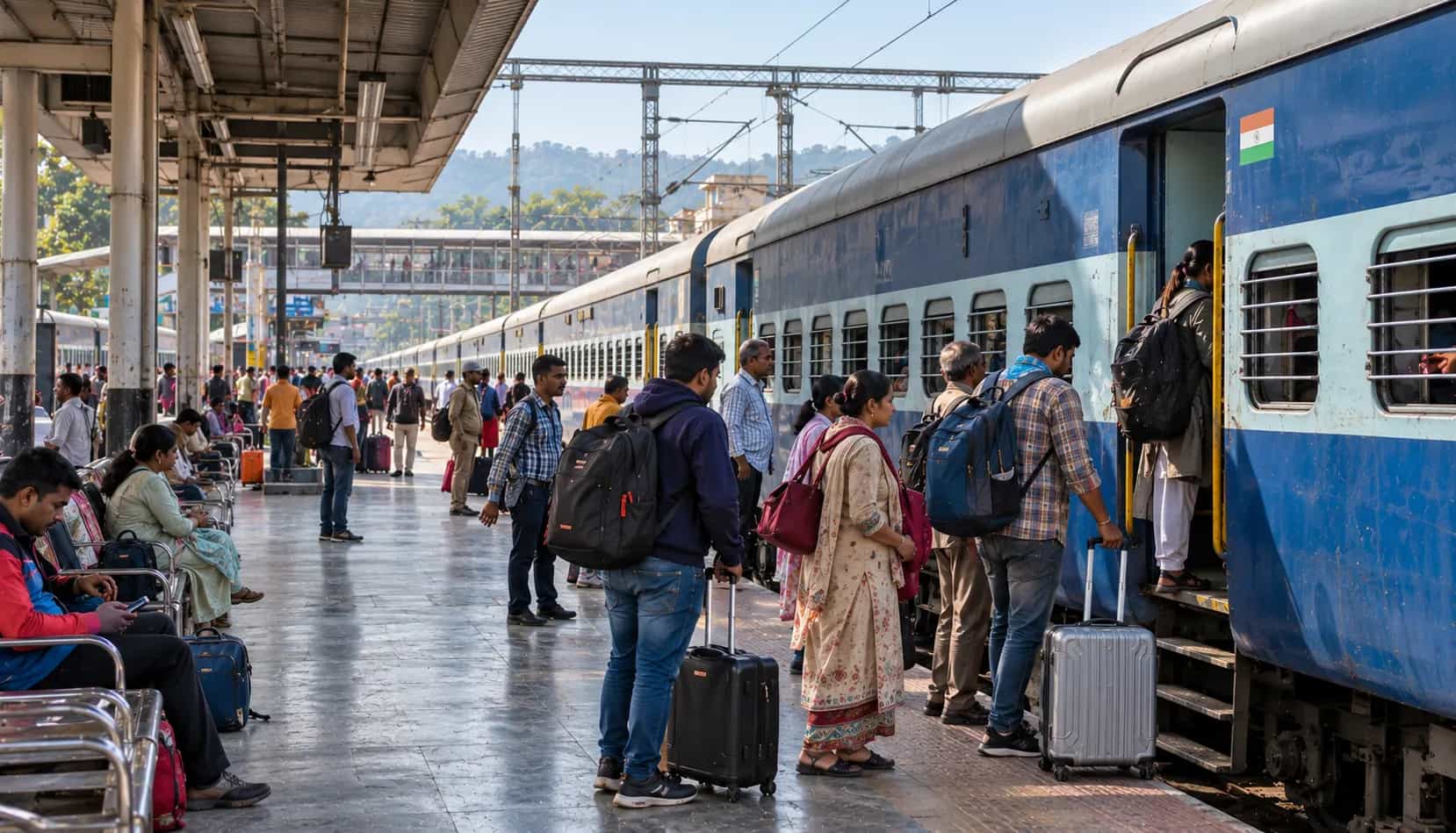
There is no train to Mussoorie, the nearest railhead is Dehradun Junction (station code: DDN). Several daily trains run from Haridwar to Dehradun, including the Mussoorie Express (train 14041, named for this onward connection), Doon Express, and DDN Shatabdi. From Dehradun station, Mussoorie is a 45-minute to 1-hour taxi or bus ride uphill.
For train booking, check IRCTC. The Haridwar to Dehradun train journey takes approximately 1 hour 15 minutes to 1 hour 45 minutes depending on the service. Once in Dehradun, shared taxis (Sumo or Bolero) to Mussoorie depart from stands near the railway station and the clock tower area.
For the full breakdown of trains on this route, see our Haridwar to Dehradun guide.
Best Time to Travel Haridwar to Mussoorie
March to June: Peak season for Mussoorie. Weather is pleasant, schools are on holiday, and the hill station is at its busiest. Book taxis well in advance. Expect higher fares during April and May long weekends.
October to November: An excellent window. Post-monsoon skies are clear, crowds are thinner than summer, and the road to Mussoorie is dry and safe. October is one of the best months for this trip.
July to September (Monsoon): Landslides and road closures are possible on the Mussoorie hill road. Check road conditions before setting out. The hill section is particularly vulnerable after heavy overnight rain.
December to February (Winter): Snow can fall in Mussoorie from December onward. The Dehradun to Mussoorie road may be held by police during heavy snowfall. Chains may be required on the upper bends. If you are travelling in this period, check the IMD forecast for Mussoorie before departure and factor in a possible delay.
For the broader Haridwar travel planning picture, the Best Time to Visit Haridwar guide covers what each season looks like at the ghats and pilgrimage sites.
Mussoorie: What to See on Arrival
Mussoorie is built along a ridge at approximately 2,000 m above sea level. The main areas are:
- Mall Road: The pedestrian promenade running the spine of the ridge. Shopping, cafes and the main gathering point.
- Gun Hill: The second-highest point in Mussoorie, accessible by ropeway from Mall Road. Views of the Doon valley and, on clear days, Himalayan peaks.
- Kempty Falls: Approximately 15 km from Mussoorie town, on the Chakrata road. The most visited waterfall near Mussoorie.
- Lal Tibba: The highest point in Mussoorie (2,275 m), in the Landour cantonment area. A telescope point with views toward Badrinath, Kedarnath, Bandarpunch and Gangotri peaks on clear winter mornings.
- Cloud’s End: The westernmost point of Mussoorie, near the edge of the forest. A quiet spot away from the Mall Road crowd.

Practical Tips
- Start early. Leave Haridwar by 7:00 to 8:00 AM to reach Mussoorie before noon and have a full afternoon. The Dehradun city traffic and the hill road both take longer if you arrive mid-day.
- Vehicle choice for the hill road. If travelling with luggage and more than three passengers, book a Ertiga or Innova Crysta. A laden small sedan on 35 km of uphill road with hairpins is uncomfortable and occasionally unreliable.
- Parking in Mussoorie. Private vehicles are restricted on Mall Road. Drop off at the barrier and walk, or use the designated parking areas. If coming by taxi, confirm the drop-off point with your driver.
- Check the road in monsoon and winter. The Mussoorie hill road can be held or closed after heavy rain or snowfall. Check before departure.
Where to Stay for the Haridwar Base
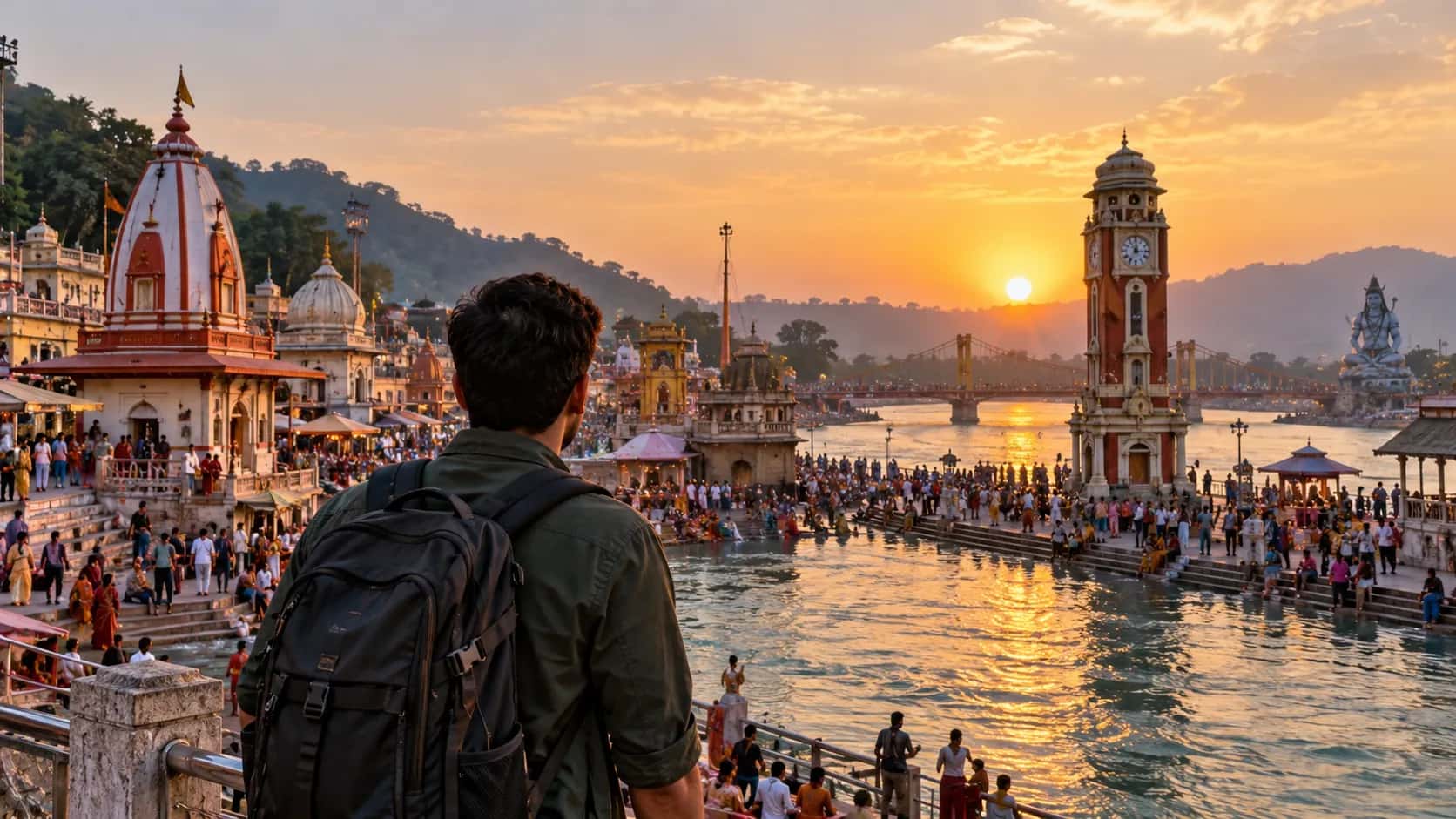
Most travellers stay in Haridwar for Ganga Aarti and pilgrimage visits, then take a day trip or extend to Mussoorie. Baromas Retreat is in Bahadrabad, 13 km and around 40 minutes from Har Ki Pauri, on the Haridwar-Delhi highway. It is a practical base before heading north to Dehradun and Mussoorie the following morning.